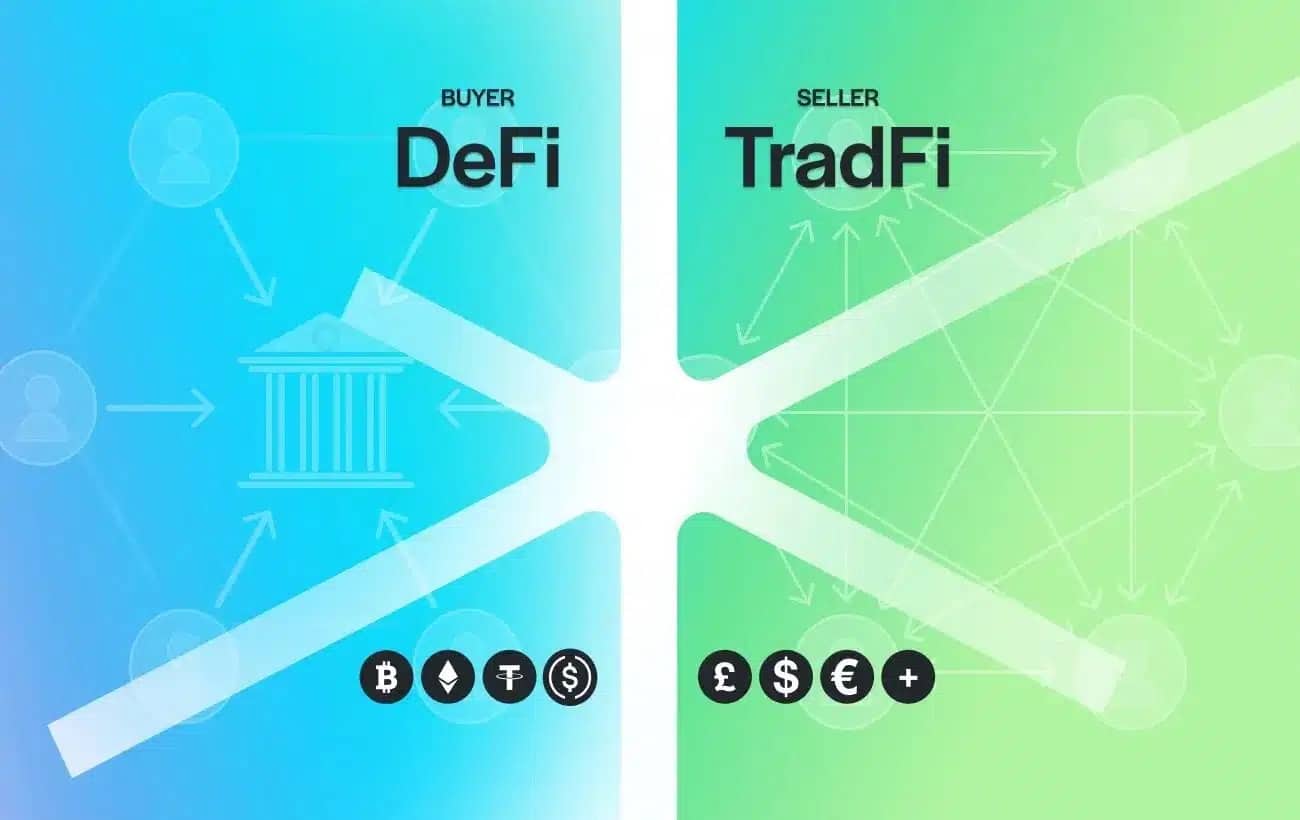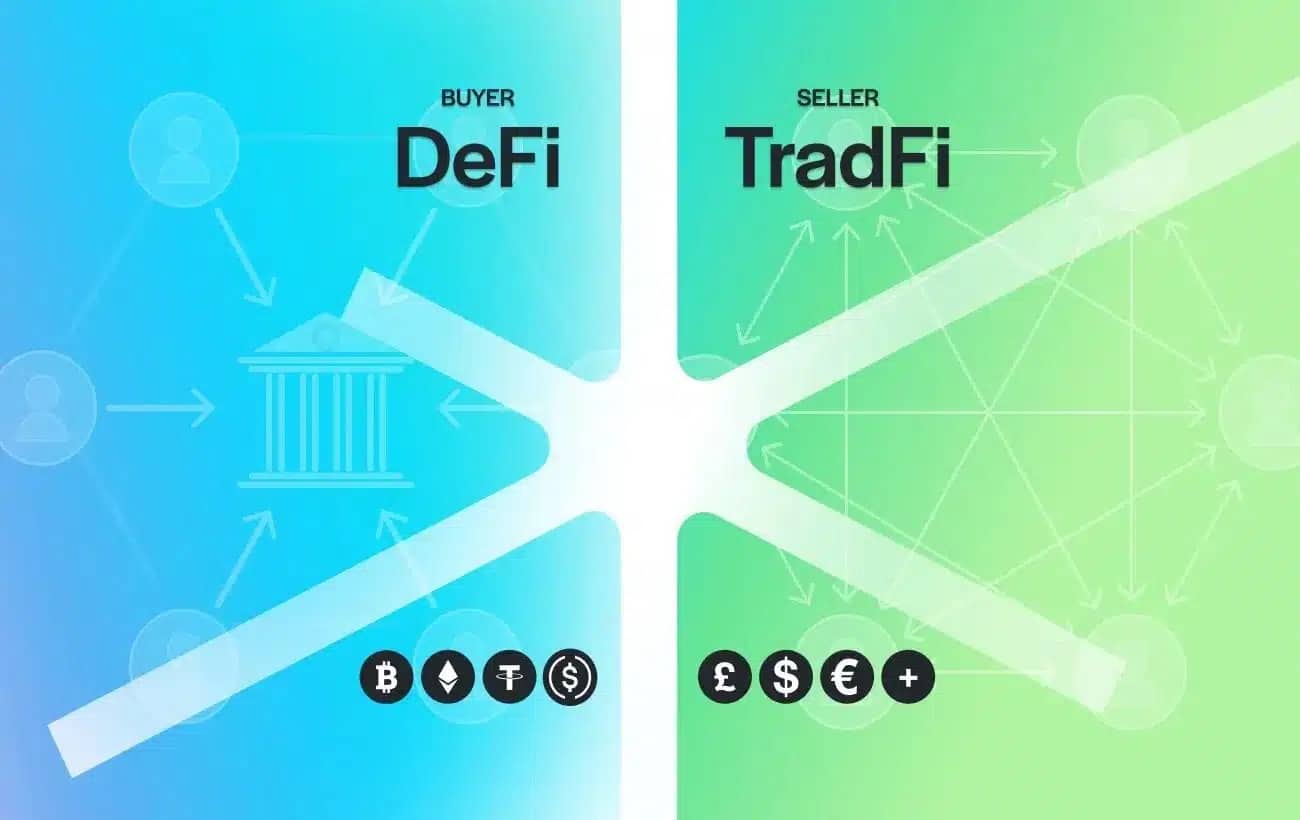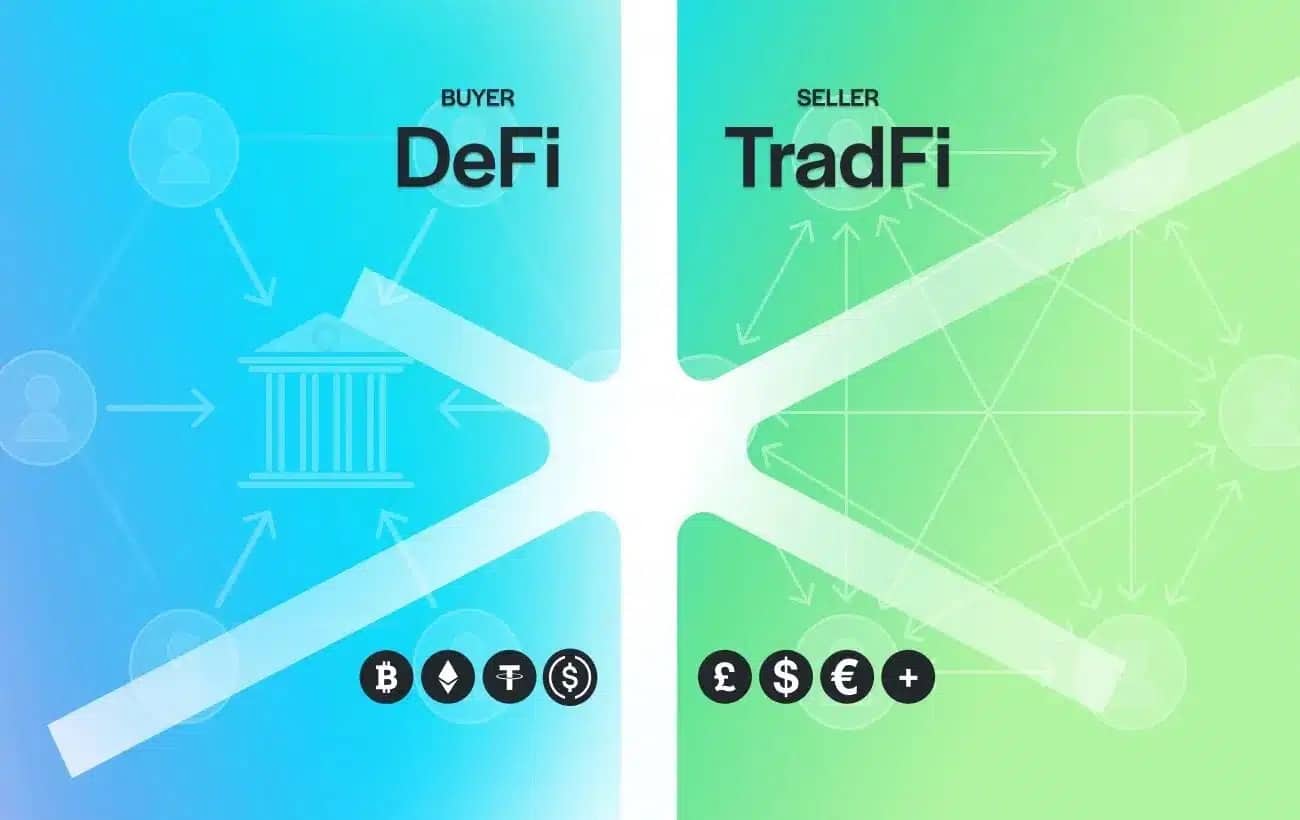

Why crypto’s biggest obstacle isn’t volatility, regulation, or adoption – it’s that you can’t pay your landlord with it.
There’s $1.4 trillion sitting in stablecoins right now.
Not Bitcoin. Not speculative tokens. Not memecoins. Actual stable, dollar-pegged digital currency.
And yet, if you hold USDT or USDC and need to pay rent, settle an invoice, or cover payroll – you’re stuck.
The “future of money” can’t pay for the present.
The Acceptance Gap No One Talks About
Here’s a statistic that should make every crypto enthusiast uncomfortable:
600 million people and companies hold cryptocurrency.
Only 20,000 businesses worldwide accept it as payment.
That’s an acceptance rate of 0.003%.
Think about that for a second. More people hold crypto than the entire population of North America. But you have better odds of finding a store that accepts Serbian dinars than one that takes USDC.
Why?
Because accepting crypto is hard. Businesses need:
- Specialized payment processors
- Accounting systems that understand blockchain
- Tax compliance for crypto transactions
- Staff trained on wallet addresses and transaction IDs
- Risk management for price volatility (even with stablecoins)
So they just… don’t. They stick with what works: bank transfers, credit cards, invoices.
But here’s what nobody realized: They don’t need to accept crypto. They just need to accept bank transfers.
And that changes everything.
The Last-Mile Problem Everyone Missed
Here’s the uncomfortable truth about crypto: We solved the wrong problems.
We built decentralized exchanges. We created DeFi protocols. We made it possible to swap between 10,000 tokens in milliseconds.
But we never built the one thing that actually matters: a way to pay your landlord.
While the industry obsessed over trading infrastructure, a massive gap opened up:
- 1.4 trillion dollars in stablecoins that can’t be easily spent on real-world expenses
- Millions of people paid in crypto who need to pay bills in fiat
- Thousands of businesses that want to pay suppliers without touching an exchange
The entire crypto payment stack stops at your wallet. After that? You’re on your own.
What TrustLinq Actually Does
TrustLinq doesn’t make businesses accept crypto.
TrustLinq makes every business that accepts bank transfers accidentally accept crypto.
Here’s how:
You hold USDT in your wallet. Your landlord has a bank account in Spain. They’ve never heard of crypto and don’t want to.
You use TrustLinq. Your USDT becomes a EUR bank transfer to their account.
From their perspective? They received a normal bank transfer. From your perspective? You paid with crypto.
The recipient doesn’t need:
- A crypto wallet
- To understand blockchain
- To accept “cryptocurrency”
- To change anything about how they do business
They just see money in their bank account. Which is all they ever wanted anyway.
This means the 600 million crypto holders can now pay the 99.997% of businesses that don’t accept crypto.
That’s not a product feature. That’s a category shift.
Why Exchanges Won’t Fix This
“Just use Coinbase,” they say. “Cash out to your bank.”
Here’s why that doesn’t work:
For individuals:
- 3-7% in fees (exchange spread + withdrawal + bank fees)
- 2-5 day settlement times (your rent is due now, not next week)
- Tax reporting nightmare (every cash-out is a taxable event)
- Geographic restrictions (most exchanges don’t serve 80% of the world)
For businesses:
- KYC hell (onboarding takes weeks
- Compliance overhead (AML, transaction monitoring, reporting)
- Custody risk (your money sits on an exchange that could freeze accounts)
- No B2B features (try explaining to your CFO why paying suppliers requires a Coinbase account)
But here’s the real reason exchanges won’t solve this:
They don’t want to.
Exchanges make money on trading fees. Every time you buy, sell, or swap – they get a cut. Building seamless crypto-to-fiat payment rails would reduce trading volume. People would hold USDT for payments, not speculation.
The numbers tell the story: cashing out crypto via major exchanges costs 3-7% in combined fees and takes 2-5 days. Coinbase charges 2-4.5% for domestic bank transfers. Binance and Kraken hover in similar ranges for international withdrawals.
That’s not a payment solution. That’s an exit strategy.
Major exchanges had a decade to build payment infrastructure. Coinbase built Commerce, Binance built Pay, Kraken built merchant tools – all focused on helping merchants accept crypto and immediately convert it to dollars.
None built seamless off-ramps for people who want to spend their crypto on everyday expenses.
The infrastructure for actually USING crypto for payments? Still missing.
Until now.
What We Built
TrustLinq isn’t another exchange. We’re not another wallet. We’re not another trading platform.
We’re payment rails.
Here’s what that means:
You hold USDT or USDC in your own wallet. Your recipient has a bank account anywhere in the world. We connect the two – directly.
- Your crypto -> Their bank account
- No exchange account needed
- No custody (you hold your keys until the moment of payment)
- No conversion slippage
- Settlement in same day to 1 business day
- 80+ currencies across 170+ countries and territories
This is the first non-custodial to third-party payment infrastructure in crypto.
You don’t send your funds to us. You don’t trust us to hold them. You trigger a payment from your wallet, and we execute settlement – directly to your recipient’s bank account.
This is what the crypto industry should have built in 2017.
The Model That Changes Everything
Here’s why this matters more than you think:
For Individuals:
- Freelancers paid in USDC by US clients can now pay rent in EUR without losing 5% to exchange fees
- Digital nomads holding crypto can pay for apartments, utilities, and services in local currency
- Immigrant workers can send money home without Western Union taking 7-10%
For Businesses:
- Web3 companies can pay contractors in fiat without setting up 47 different bank accounts
- DAOs can settle real-world expenses (legal fees, office rent, events) without treasurers cashing out personally
- Crypto-native businesses can operate entirely on-chain and still pay suppliers in traditional currencies
For the Industry:
This unlocks actual utility beyond speculation.
Stablecoins stop being “trading pairs” and start being money.
Not “magic internet money.” Not “digital gold.” Just… money. The kind you use to pay for things.
And suddenly, every business in the world becomes crypto-compatible – without knowing it.
Your landlord doesn’t accept crypto. But they accept bank transfers. Which means they accept crypto now – they just don’t realize it yet.
That’s 600 million potential payers unlocked for every business with a bank account.
Why Regulation Made This Possible
Everyone thinks regulation kills crypto innovation.
We think regulation is what makes it real.
TrustLinq is Swiss-regulated from day one. Not because we had to be. Because operating in the shadows doesn’t scale.
If you want to process millions of dollars in payments, touching the traditional banking system, across 170+ countries – you need regulatory clarity.
We worked WITH regulators, not against them.
The result?
- Regulated in Switzerland
- Banking partnerships in place
- Compliance infrastructure built-in
- No regulatory uncertainty
While the rest of crypto fights with the SEC, we’re already operational.
Because we didn’t build a product that breaks rules. We built infrastructure that creates new ones.
The Data: Why This Isn’t Vaporware
Here’s what skeptics always ask: “Is anyone actually using this?”
Yes.
- Payments processed across 170+ countries and territories
- Settlement through domestic banking rails in 80+ local currencies
- Settlement time: Same day to next business day (vs 2-5 days for exchange cash-outs)
- Total cost: 2-3% all-in (vs 3-7% at exchanges)
We’re not theoretical. We’re operational.
One customer – a freelance developer in Barcelona paid in USDC – told us:
“I was losing €200/month to Coinbase fees and exchange spreads. Now I lose €40. That’s €1,920 back in my pocket every year. This isn’t a feature – it’s life-changing.”
Another – a DAO treasurer managing a $2M treasury:
“Before TrustLinq, paying our legal fees meant I had to personally cash out USDC, wire it from my bank, and expense it back. Now? One click. The DAO pays directly. This is how crypto should work.”
What Happens Next
Here’s our prediction, and you can hold us to it:
Within 24 months:
- Paying rent with USDT will be as normal as paying with a credit card
- DAOs will settle 80% of real-world expenses without touching centralized exchanges
- “Crypto salary” will mean actual crypto not “paid in BTC, cashed out immediately”
Within 5 years:
- Traditional banks will operate as settlement layers for crypto payment rails
- The question won’t be “Do you accept crypto?” but “Which stablecoin do you prefer?”
- Exchanges will be for trading. Payment infrastructure (like us) will be for living.
We’re not saying crypto replaces fiat.
We’re saying crypto becomes a better way to MOVE fiat.
And when you can pay anyone with a bank account using your crypto wallet – you’ve just turned every business on Earth into a crypto-accepting business.
They just don’t know it yet.
Why Banks Should Be Worried
Here’s the uncomfortable truth for traditional finance:
TrustLinq does what banks do – move money from Point A to Point B – but:
- Faster (same day vs 2-5 days)
- Cheaper (2-3% all-in vs 3-7% for international transfers)
- Local in many cases (no SWIFT, no correspondent banking)
- Transparent (on-chain verification)
We’re not trying to replace banks.
But if we succeed, we might accidentally make them irrelevant for cross-border payments.
Some banks see the writing on the wall. We’ve had inquiries from financial institutions asking: “Can we white-label this?”
They know what’s coming.
Crypto rails are better payment infrastructure than 1970s SWIFT networks.
It’s not even close.
The Infrastructure Play Everyone Missed
You know what’s interesting?
The biggest winners in crypto haven’t been the protocols.
- Coinbase: $80B+ valuation by providing infrastructure (exchange)
- Circle: $9B valuation by providing infrastructure (USDC issuance)
- Chainalysis: $8.6B valuation by providing infrastructure (compliance)
The winners built RAILS, not applications.
And there’s one massive piece of infrastructure still missing:
The payment layer between crypto and the real world.
That’s what we built.
Not a dApp. Not a token. Not a protocol.
Infrastructure.
The unsexy, invisible, absolutely essential layer that makes everything else possible.
The layer that turns 600 million crypto holders into potential customers for every business on Earth.
For Journalists and Anyone Who Thinks Crypto Is “Just Speculation”
This isn’t about price predictions.
It’s not about Bitcoin hitting $100K.
It’s not about the next memecoin.
This is about utility.
$1.4 trillion in stablecoins exists because people WANT to hold dollars in crypto form. They like the transparency, the portability, the control.
But they still need to pay rent.
We built the bridge.
Non-custodial to third-party payments. The first of its kind. Already operational.
And in doing so, we accidentally solved the acceptance problem:
600 million people can now pay billions of businesses that “don’t accept crypto.”
Because those businesses accept bank transfers. And we turn crypto into bank transfers.
If you’re a journalist covering crypto, fintech, or payments – this is the infrastructure story you haven’t written yet.
If you’re an investor looking for the next Stripe – this is the category that doesn’t exist yet.
If you’re just someone frustrated that your USDC can’t pay your landlord – we built this for you.
About TrustLinq
TrustLinq is the first Swiss-regulated crypto-to-fiat payment infrastructure enabling direct, non-custodial payments from digital wallets to traditional bank accounts in 80+ currencies across 170+ countries and territories.