Estimated reading time: 12 minutes
The Stablecoin Sandwich

If you work in fintech, crypto, or payments, the phrase “stablecoin sandwich” has been impossible to avoid for the past 18 months. Ripple is building it. Visa is building it. PayPal is building it. A16Z called it one of the defining trends of 2026. Banks that would not touch crypto three years ago are now issuing their own stablecoins to power it.
Everyone is looking at the same model. Fiat goes in, stablecoins do the heavy lifting in the middle, and fiat comes out the other side. It is a genuinely smart solution for cross-border settlement. The numbers back the excitement: the global stablecoin supply crossed $300 billion in 2025, and stablecoin transaction volumes reached what McKinsey described as “payment network scale.”
But here is the part nobody talks about.
The stablecoin sandwich was designed to solve a specific problem for people who start in fiat and want to move it internationally faster and cheaper. It assumes the person sending money already lives inside the traditional banking system.
What happens when they do not?
What the stablecoin sandwich actually is
Let’s be precise about this, because the term gets used loosely.
A stablecoin sandwich is a cross-border payment process that starts with fiat, converts those funds into a stablecoin, moves them on-chain, and then settles into the recipient’s local fiat currency on the other side. Transactions begin and end in traditional fiat currencies, while regulated stablecoins handle the settlement in the middle.
The benefit is in that middle layer. Instead of routing a payment through correspondent banks, which can take days, cost a fortune in fees, and fail silently in obscure currency corridors, you use stablecoins as the settlement rail. They are fast, they run 24/7, and they are borderless.
Companies like Convera, Ripple, Nium, and BVNK are all building variations of this structure. Even though the payment goes through three different forms of currency to get from point A to point B, the process can be much faster than a traditional cross-border transfer.
This is why every major player in payments is racing to build or acquire stablecoin orchestration capability. Visa expanded its stablecoin settlement capabilities for issuers and acquirers. Stripe spent over a billion dollars to acquire Bridge, a stablecoin infrastructure company. The investment is warranted.
The stablecoin sandwich is a genuine innovation. The industry is right to back it.
But it only solves one side of the problem.
The half of the problem nobody is solving
The stablecoin sandwich assumes a very specific starting point: someone who holds fiat and wants to move it internationally with less friction.
Now consider the fast-growing population of people who do not start there.
Right now, there are hundreds of thousands of individuals and businesses sitting on significant stablecoin holdings. USDT, USDC, EURC and RLUSD in self-custodial wallets. Crypto-native companies. Freelancers paid in crypto. Traders who never touch an exchange withdrawal. Businesses whose entire treasury is denominated in stablecoins.
These people want exactly what stablecoin sandwich users want: fast, low-cost, borderless payments. The difference is their starting point. They are not converting fiat into stablecoins to move money more efficiently. They are already in stablecoins and need to pay people who expect fiat.
They need to pay rent. Pay staff. Pay vendors. Pay affiliates. Settle invoices. Fund operations across borders.
And in almost every case, the recipient has no interest in receiving crypto. They want a bank transfer. A number that lands in their account in their local currency, with no friction and no new accounts to open.
The current path to make that happen involves at least three steps: sell the crypto on an exchange, wait for settlement to your own bank account, then initiate a separate payment to the third party. That process takes days. It involves custody risk at the exchange. And it requires the sender to have their own bank account in the first place.
This is the gap. And it is large.
The stablecoin toast, and why it still misses the point
Some sharp observers in the payments industry have already noticed that the stablecoin sandwich has limits.
One contrarian view is that for developed-market corridors like EUR to USD, the sandwich model might actually be slower and more expensive than traditional methods. The real value, the argument goes, emerges when one party naturally holds stablecoins while the other needs fiat. This has been named the “stablecoin toast”: use stablecoins where you already have them, rather than converting fiat into crypto just to convert it back again.
The stablecoin toast is an honest acknowledgment that forcing unnecessary conversions defeats the purpose. If you already hold stablecoins, the fiat-in step is redundant.
But even this framing defaults to the assumption that the end destination is your own bank account. The conversation has not yet moved to the more fundamental question: what if you want to pay someone else’s bank account directly, without the funds ever passing through yours?
That is not a sandwich. That is not toast. That is a structurally different category of payment.
The layer everyone is missing: crypto-funded fiat settlement
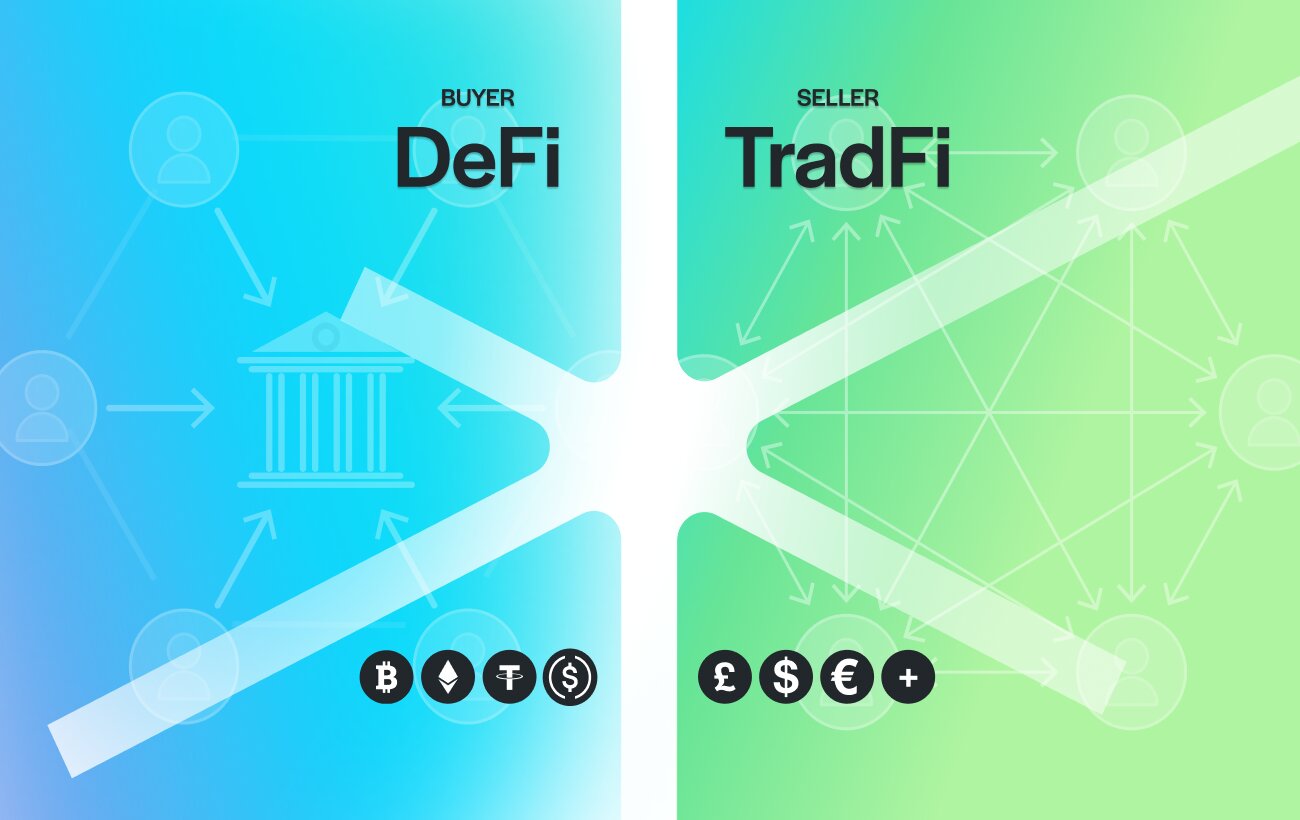
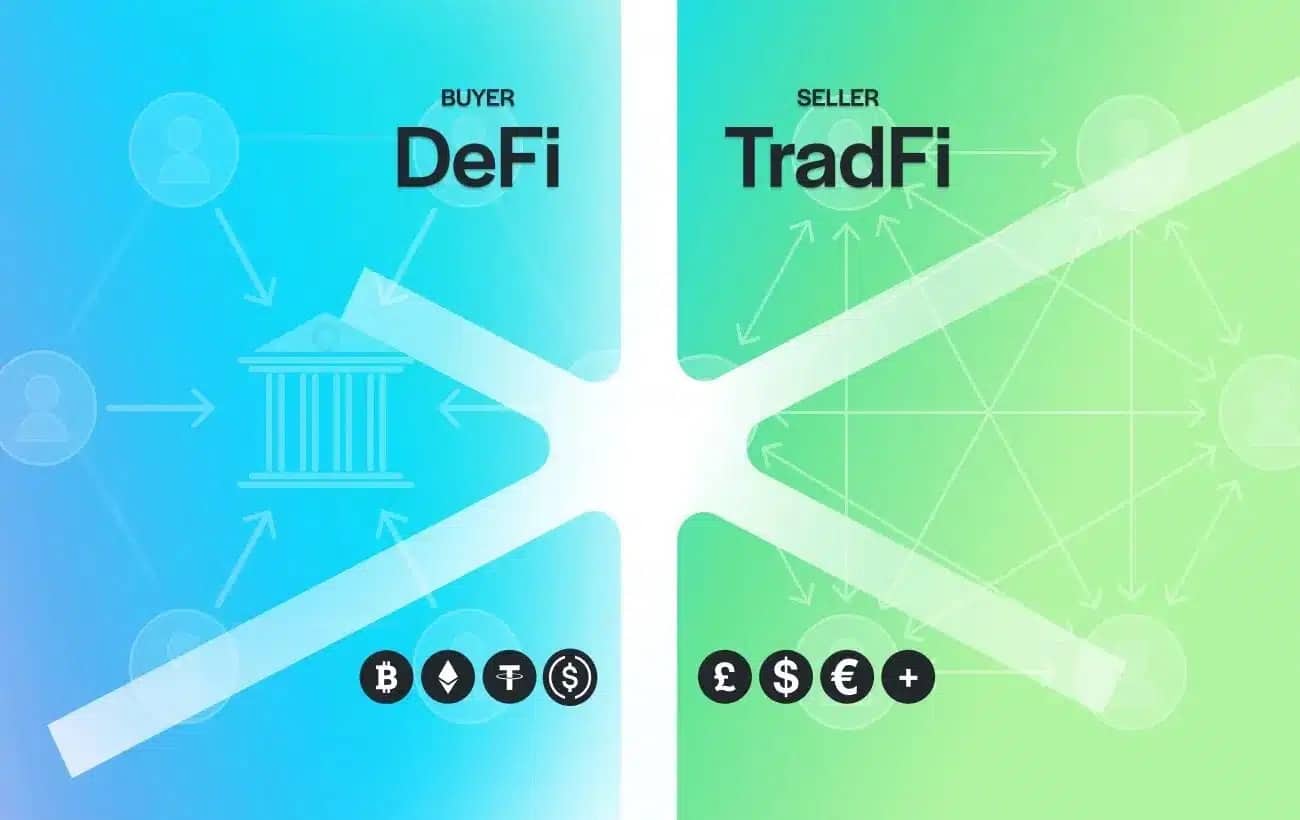
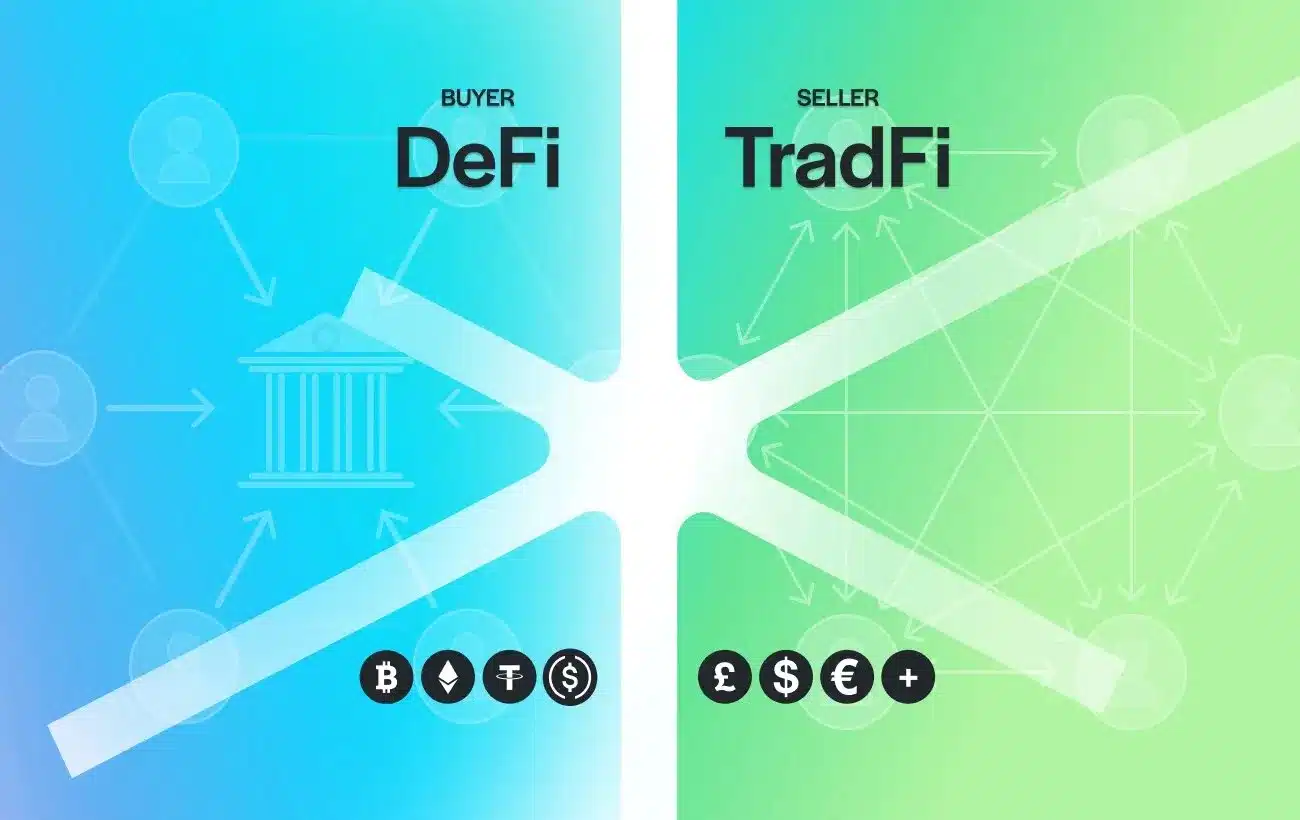
The stablecoin sandwich lives in the world of fiat senders using crypto rails to move money more efficiently. What we are describing here is something structurally different: crypto holders using regulated infrastructure to settle payments directly to third-party bank accounts in fiat, without off-ramping first, without custody, and without the recipient needing to touch crypto at all.
The payment flow looks like this:
Self-custodial stablecoin wallet > Payment initiated > Direct fiat bank transfer to any third-party recipient
No exchange. No intermediate bank account. No custody handoff. No waiting.
The sender stays self-custodial throughout. The recipient sees a standard bank transfer. Crypto is used where it makes sense, on the funding side. Fiat is delivered where it is required, on the settlement side.
This is not off-ramping. Off-ramps move crypto into the sender’s own account. That is useful, but it does not solve the third-party payment problem. You still have to initiate a second transaction.
This is not merchant processing. Merchant gateways like CoinGate or NOWPayments are built for receiving crypto, not for spending it toward recipients who do not accept crypto. You can read here the difference between TrustLinq and Crypto processors.
This is not a crypto card. Card-rail spending works at merchants with card terminals. Bank transfers to suppliers, staff, and vendors require something different.
Crypto-funded fiat settlement is a new layer in the payment stack. Self-custodial crypto funds regulated fiat payments directly to third parties. The merchant or recipient does not need to accept crypto. The platform takes no custody of user funds.
It is a genuinely new category. And almost nobody is building it.
Why this matters more than it sounds
Think about who this unlocks.
Between 2028 and 2048, an estimated $100 trillion in wealth will move from Boomers to Millennials and Gen Z. These are generations where nearly half have held or currently hold crypto. As this transfer progresses, stablecoins will increasingly be a default form of holding value, not just a speculative asset.
In 2025, adjusted stablecoin volume, which filters out bot activity and non-economic transfers to measure real economic activity, grew at 133% per year, reaching $28 trillion. Stablecoin payment volumes are on pace to match Visa and Mastercard’s off-chain transaction volumes within the next decade.
The missing piece in that projection is not more on-ramps or off-ramps or exchanges. It is infrastructure that lets people who are already in crypto participate in the real economy without first converting back to fiat for their own account.
For businesses, the stakes are immediate. Any company operating on a stablecoin treasury needs to cover payroll, vendor payments, software subscriptions, and operational costs across multiple currencies every single week. Today, doing that involves centralized exchange custody, manual conversions, days of settlement delay, and real counterparty risk. Every week without a better solution is a week of unnecessary friction and cost.
The demand is already there. The infrastructure is only just catching up.
Why nobody has built this yet
If this opportunity is clear, why has nobody delivered it at scale?
The honest answer is that it requires several things to be true at the same time, and those things are genuinely hard to combine.
Regulatory standing. Operating a non-custodial crypto-to-fiat settlement infrastructure is not something you can build without licensing. It requires AML and CTF compliance, KYC infrastructure, and banking relationships that give you access to SEPA, SWIFT, ACH, and Faster Payments rails. Companies handling USDT or USDC transactions are expected to meet nearly the same standards as a bank handling cash transfers. That compliance overhead is a real barrier to entry.
Non-custodial architecture. After the FTX collapse, the industry learned what happens when a platform takes custody of client crypto. Building a genuinely non-custodial model that still integrates with fiat banking rails requires a smart contract architecture that almost nobody has deployed at scale.
Global payment rail access. Supporting stablecoin payment flows requires a coordinated infrastructure across multiple banking relationships, network access, APIs, and reconciliation systems. Building that across 170+ countries takes years, not months.
Deep knowledge of actual use cases. Not remittances. Not consumer wallets. The corporate payroll, vendor payment, and operational expense workflows that generate real, recurring volume. That requires domain expertise that generalist fintechs do not have.
The stablecoin sandwich players have the fiat side nailed. The non-custodial wallet providers have self-custody sorted. Nobody has connected both ends to third-party fiat settlement, at scale, with full regulatory cover, across 170 countries.
Until now.
What TrustLinq is building
TrustLinq is a Swiss-regulated fintech operating under SO-FIT/FINMA licensing, and it has built exactly this infrastructure.
The model is straightforward. A user holds USDC, USDT, EURC or RLUSD in a self-custodial wallet. Through TrustLinq, they initiate a payment to a third party’s bank account in any supported currency. The recipient receives a standard bank transfer in their local currency. TrustLinq never takes custody of the user’s crypto. The sender does not need their own bank account. The recipient never touches crypto.
The platform supports 170+ countries, 80+ currencies and over 60 payment corridors, runs on SEPA, SWIFT, ACH, Faster Payments and more local rails.
The architecture uses a non-custodial vault model. Users generate their own keypairs locally. Primary addresses are allowlisted immutably. Multi-signature authorization prevents unauthorized access. At no point does TrustLinq hold private keys or take custody of funds.
The use cases are as broad as the population of people who hold stablecoins. Paying rent from a USDT wallet. Paying a freelancer in Brazil from USDC holdings. Covering a software invoice in EUR from a stablecoin treasury. Sending payroll to staff in 15 countries from a single payment interface. Whatever the real-world payment need is, if the sender holds stablecoins and the recipient expects fiat, this is the infrastructure that connects them.
The search intent tells the story
Here is something that tells you exactly where the market is heading.
The queries that bring users to TrustLinq are not about payment architecture. They are things like: “pay rent with crypto,” “pay suppliers with stablecoins,” “crypto to bank transfer,” and “how to pay someone with USDT.” These are people who already hold stablecoins and are trying to figure out how to use them in the real world. They represent immediate, transactional search intent.
The stablecoin sandwich conversation is happening at the institutional level. This one is happening at the user level. Those users have already arrived. The infrastructure to serve them, with regulatory cover, non-custodial architecture, and genuine global reach, is only just emerging.
Where the payment stack is heading
The history of payments technology follows a pattern. Infrastructure gets built for institutions first. Then the consumer layer catches up. Then the people who do not fit the standard model get served last.
The stablecoin sandwich is the institutional layer. It is important, and the investment going into it is warranted.
But the next shift in payments is moving away from the question of how to route fiat more efficiently through stablecoins, and toward the question of who actually owns the relationship with the end user, and what those users actually need.
The users who matter most to the next layer are not moving fiat through crypto infrastructure. They are already in crypto, holding stablecoins, and trying to participate in a world that still runs on bank transfers.
The sandwich gave the financial system a better cross-border rail. The next layer gives crypto holders a direct path to the real economy without off-ramping, without custody, and without the recipient ever needing to know that crypto was involved.
The sandwich has been invented. The toast has been named. What comes next is the layer nobody built yet.
How these models compare
| Payment model | Starting point | Ends at | Custody | Pays third parties |
|---|---|---|---|---|
| Stablecoin sandwich | Fiat | Fiat | Usually custodial | No |
| Off-ramp | Crypto | Sender’s own bank account | Custodial | No |
| Crypto card | Crypto | Merchant card terminal | Custodial | Partial |
| Merchant gateway | Customer crypto | Merchant crypto wallet | Non-custodial | No |
| Crypto-funded fiat settlement | Self-custodial crypto | Any third-party bank account | Non-custodial | Yes |
The bottom row is where TrustLinq operates. It is also the row that does not exist at scale anywhere else in the market. You can read here
The stablecoin sandwich is a cross-border payment model where a transaction starts in fiat, converts to a stablecoin for fast on-chain settlement, and converts back to fiat for the recipient. It lets businesses move money internationally using blockchain speed, without either party holding crypto long-term.
A stablecoin sandwich starts with fiat and ends with fiat, using stablecoins as the middle layer. Crypto-funded fiat settlement starts with self-custodial crypto and ends with a fiat bank transfer to a third party, without the sender needing a bank account and without the recipient needing to accept crypto.
Yes. Through platforms like TrustLinq, you can fund a payment from a self-custodial USDT, USDC, EURC or RLUSD wallet and settle it directly to any third-party bank account in 170+ countries in 80+ local fiat currency. The recipient receives a standard bank transfer and does not need to interact with crypto at all.
TrustLinq operates under Swiss SO-FIT/FINMA regulation, which requires strict AML and CTF compliance, KYC verification, and EU-standard data handling. The non-custodial architecture means user funds are never held by the platform at any point in the transaction.
Businesses holding USDT or USDC can use TrustLinq to pay employees, contractors, affiliates, and vendors directly in fiat bank transfers across 80+ currencies, without going through a centralized exchange or giving up self-custody of their funds.
Conclusion
The stablecoin sandwich is a real innovation. The industry is right to invest in it. But the focus on fiat-to-fiat routing through stablecoins has left a structural gap wide open.
Millions of people and businesses already hold stablecoins and need to pay people who do not. They want the same things everyone wants from modern payments: speed, low cost, global reach, and simplicity. The difference is they are starting from crypto, not fiat.
Crypto-funded fiat settlement is the layer that connects those holders to the real economy. It is non-custodial, globally regulated, and already operational.
The sandwich is almost fully assembled. The missing ingredient was never inside it.
Start Paying Your Bills with Crypto Today
TrustLinq converts your USDT (ERC-20 and TRC-20), USDC, EURC, and RLUSD into fiat bank transfers for any bill recipient worldwide. Register once and pay rent, utilities, tuition, legal fees, or any other bill directly from your wallet.